
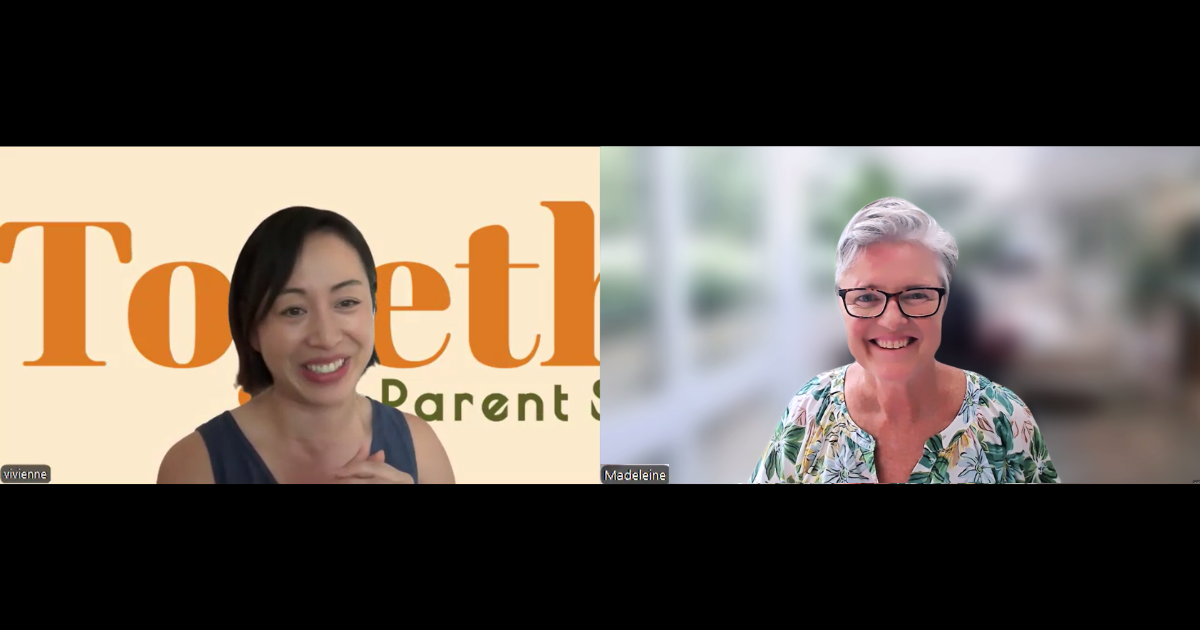
Podcast Recap:
This conversation explores why knowing yourself as a parent - your values, strengths, and emotional triggers - is key to building stronger connections with your young person. Vivienne shares practical, compassionate insights to help parents understand their inner world, respond with intention, and navigate challenges with greater confidence.
Guest: Vivienne Li — Social Worker & Founder of Together Parent Support Inc.
Host: Madeleine Steel
Podcast Transcript:
Introduction and background:
Madeleine:
Hi, Viv! Welcome! Can you please start by introducing yourself and sharing a little bit about the work you do and have done with parents and young people?
Viv:
Hi, Madeleine, thank you for having me. I’m a social worker and the founder of Together Parent Coaching. I support parents who are facing different parenting challenges and help them discover and build on their own strengths so they can navigate those challenges with more confidence.
I’m also the founder of a non‑for‑profit organisation called Together Parent Support, which focuses on supporting Chinese‑speaking parents. Our work centres on connecting parents, navigating services, and having conversations about a wide range of parenting topics.
My current work really comes from my professional journey over the past 15 years. I’ve worked as a youth mental health and drug and alcohol counsellor, a program manager, and a team leader in various NGOs. Those experiences have shaped how I now support families and parents.
Madeleine:
That's wonderful. I’m so glad we’ve connected within the network of organisations. I also want to congratulate you for founding Together Parent Support — a peer support organisation for Chinese‑speaking parents and caregivers of young people aged 12 to 25. It fills such a big gap in our community. Go, Vivian — well done!
Viv:
Thank you so much, Madeleine. I actually want to say that we couldn’t have done this without you and EPIC’s support. You’ve inspired us — especially me — in starting this. So definitely gratitude and appreciation from our end.
Madeleine:
Oh, a little bit teary — thank you! I’m so blessed to have you here and to work alongside each other. Together!
Knowing Yourself as a Parent
Madeleine:
When we talk about “knowing yourself” as a parent, what does that mean to you, and why is it such an important starting point?
Viv:
This is a really interesting topic. When parents come into coaching, one of the things I notice most is frustration. Many parents have already done so much — courses, expert talks, workshops — and yet their young person’s behaviour may not improve, or the improvement doesn’t last.
The focus is often on fixing the young person’s behaviour. Parents go home motivated to try new strategies, but sometimes the strategies don’t quite land or don’t last. When that happens, parents can feel discouraged.
So in coaching, I invite parents to pause first. Instead of jumping straight into strategies, we explore their family values and parenting style. This understanding becomes important because it helps them decide whether a strategy actually fits with the kind of parent they want to be.
When parents integrate strategies with who they are, their approach becomes more sustainable.
For example, a parent might be working on communication strategies. Things go well when the environment is calm, but then the young person breaks a rule. Emotions rise and the parent feels confused: “Am I supposed to stay calm and use the communication skill, or be firm about the rules?” Without knowing yourself, parenting can become confusing.
That’s why knowing yourself is so important.
Madeleine:
That’s such a great example. There is so much advice out there, and discomfort can sometimes come from something not aligning with your values. I love your idea of pausing and returning to your values and your style.
The “Oxygen Mask” Analogy
Madeleine:
EPIC often refers to the oxygen‑mask analogy. How does a parent’s emotional state influence their teenager, and how can being aware of this help rather than cause guilt?
Viv:
Almost every parent I meet wants to do the best for their young person. They’re already trying incredibly hard. So the first step is to acknowledge their efforts — and for parents to acknowledge their own efforts too. Be kind to yourself.
When we do that, it places us in a more positive position. Rather than thinking “What mistakes have I made?”, we can see parenting as an ongoing learning journey. We will make mistakes, and change takes time.
Your emotional state plays a big role. Self‑awareness means recognising what types of conversations trigger strong emotions, or noticing how co‑parenting can bring different values and expectations into the same situation. Awareness helps parents respond with intention rather than react in the moment.
This takes planning — which is why knowing yourself and integrating your values is so important.
Madeleine:
I love so many things you brought in there — especially the co‑parenting image of everything funneling down to the one young person. Acceptance is a huge word, and sometimes a hurdle, but once you reach it, things come through a different lens. Thank you — that’s gold.
Strengths, Values & Connection
Madeleine:
When parents reflect on their own strengths and values, what changes do you see in how they connect with their young person?
Viv:
This is my favourite question. Many parents come in feeling like they’re failing because of their child’s behaviour, or because of societal expectations or comparisons with other families.
I encourage parents to shift their focus toward what they’re doing well, and to notice small improvements. Change takes time and is rarely linear — sometimes it’s one step forward, three steps back — but movement is still movement.
When parents begin recognising their strengths and parenting in alignment with their values, their confidence grows. That confidence flows on to their young person.
Parents also begin to notice their young person’s strengths, not just their challenges. The conversation in the home shifts from problem‑focused to strength‑affirming. Parents often tell me that over time, it changes the whole vibe in the house.
Madeleine:
I quote you regularly! In your previous role, you saw that when parents engage in support, young people are more likely to engage too. That “lead by example” idea is so powerful. And yes — welcome to the marathon, not the sprint!
First Steps When Feeling Overwhelmed
Madeleine:
If a parent feels overwhelmed, what small reflective practice would you recommend as a first step?
Viv:
When parents feel overwhelmed, it’s often a sign that something important is happening in their own life. The first step is to pause and check in with yourself emotionally.
Parents of 12–25‑year‑olds are often in the “sandwich generation” — managing teenage needs, caring for ageing parents, work pressures, financial stress, health changes, even perimenopause or menopause. It all stacks up.
So first: check in with yourself.
Second: think about who is on your team. Parenting doesn’t have to be done alone. Support can come from programs, local services, counsellors, doctors, friends, family, or even your workplace.
Bringing people into your support network makes parenting easier and less isolating.
Madeleine:
So true — it takes a village. I love the “who is on your team” question. I often use a brain‑dump technique myself to sort through demands. And it’s so important to think about who’s on your young person’s team as well.
How to Reach Viv
Madeleine:
Viv, how can people find you?
Viv:
You can find me through Together Parent Support — we have a website. You can also Google Together Parent Coaching, which also has all my details. Or feel free to call me on 0414 494 626 — I’d love to chat if there’s something we can support you with.
Madeleine:
Wonderful. Thank you very much for joining us today, Viv. I truly appreciate you, and I highly recommend people reach out.
Viv:
Thank you, Madeleine.
If you’d like to learn more about EPIC or join the EPIC community, visit us at www.empoweringparentsincrisis.com.
You’ll find resources, events, this podcast transcript, and ways to connect with other parents who truly understand.
Thanks for listening — and we hope to connect with you in the EPIC community one day soon.
Do you have suggestions, comments, questions relating to today’s conversation or have ideas for future episodes?
We would love to hear from you. Send EPIC an email here.

This podcast was made possible by the support of Ku-Ring-Gai Council